
Christmas in a Whisper: Why Maline Lace Matters
Hello! We are thrilled to share our 2026 Christmas lines with you.
I always love talking with y’all, and I’ve found that writing is such a great way to gather my thoughts while still being personal and concise. So please ignore any typos to come…
We are going live with both Christmas collections tomorrow, September 7th, on Labor Day. One collection is playful, colorful, and classic, full of the colors and joys of Christmas morning. The other is soft, muted, and radiates a quiet beauty that can only truly be understood when you experience the details in person. It was inspired by the softness and stillness of Christmas.
The moment in church I look forward to most each year is when the entire building sings Silent Night—the lights dimmed, candlelight flickering, and both little and big eyes taking it all in. It is the kind of moment that reminds us why we celebrate Christmas and why certain memories stay with us forever. That is exactly what inspired our dressy line this year: moments worth remembering and keeping.
I sat down to write this little blog not only to share our collection with you, but also to help explain some of the special details behind it. Our Christmas Morning collection is very similar to what you have seen in years past: imperial batiste, Swiss insertions, and playful designs. We love it all.
Our formal line this year, though, is something new. We are introducing new materials, new laces, and new styles that may take a little more than an Instagram post to fully explain. This formal line is a step into an exciting newness—something I have dreamed of offering and bringing to our Libby Priere collections.
So, what is it?
It is Maline lace.
Why Maline lace? Nothing we create at Libby Priere is anything short of high quality. I never want to undermine one material or suggest that one is “better” than another, because every piece we create is held to our highest standards. But I do want to educate you on the differences in the materials we choose and help you understand the beauty, importance, and history behind them.
Maline lace dates back to the 1800s and is known for its delicate appearance because it is produced on a fine net. It originated in Mechelen, Belgium, where it is also known as Mechlin lace. Today, fine reproductions are still woven on historic machines in France.
Although it has a softer, more delicate look, Maline lace is quite strong and will last for generations. Because of its intricate and involved production, it is often pricier than traditional French laces. Maline lace is especially loved for its exquisite, dainty design work and its finely woven patterns. It is most commonly used for delicate garments and heirloom sewing projects.
I had a long conversation with my grandmother about laces and where she used to source hers years ago. She looked at me and said, “Taylor, a lot of the companies do not make it anymore,” and at first I wasn’t sure what she meant. She was referring to the companies that once produced the laces she bought. Many of the lace makers from the 1980s and 1990s are no longer in business.
We are so grateful for the sources we have for our materials and so thankful that there are still businesses committed to keeping these laces in production and valuing them for what they are. These materials are what bring our pieces to life, adding to both their beauty and their value. We are so honored to play even a small part in your family heirlooms, and we never take that for granted.
Our dressy Christmas collection, featuring Maline lace, is exquisite. Every detail has been thoughtfully created. I am thrilled to share close-ups of the laces below—ecru lawn, Maline lace, and hours of hand embroidery.
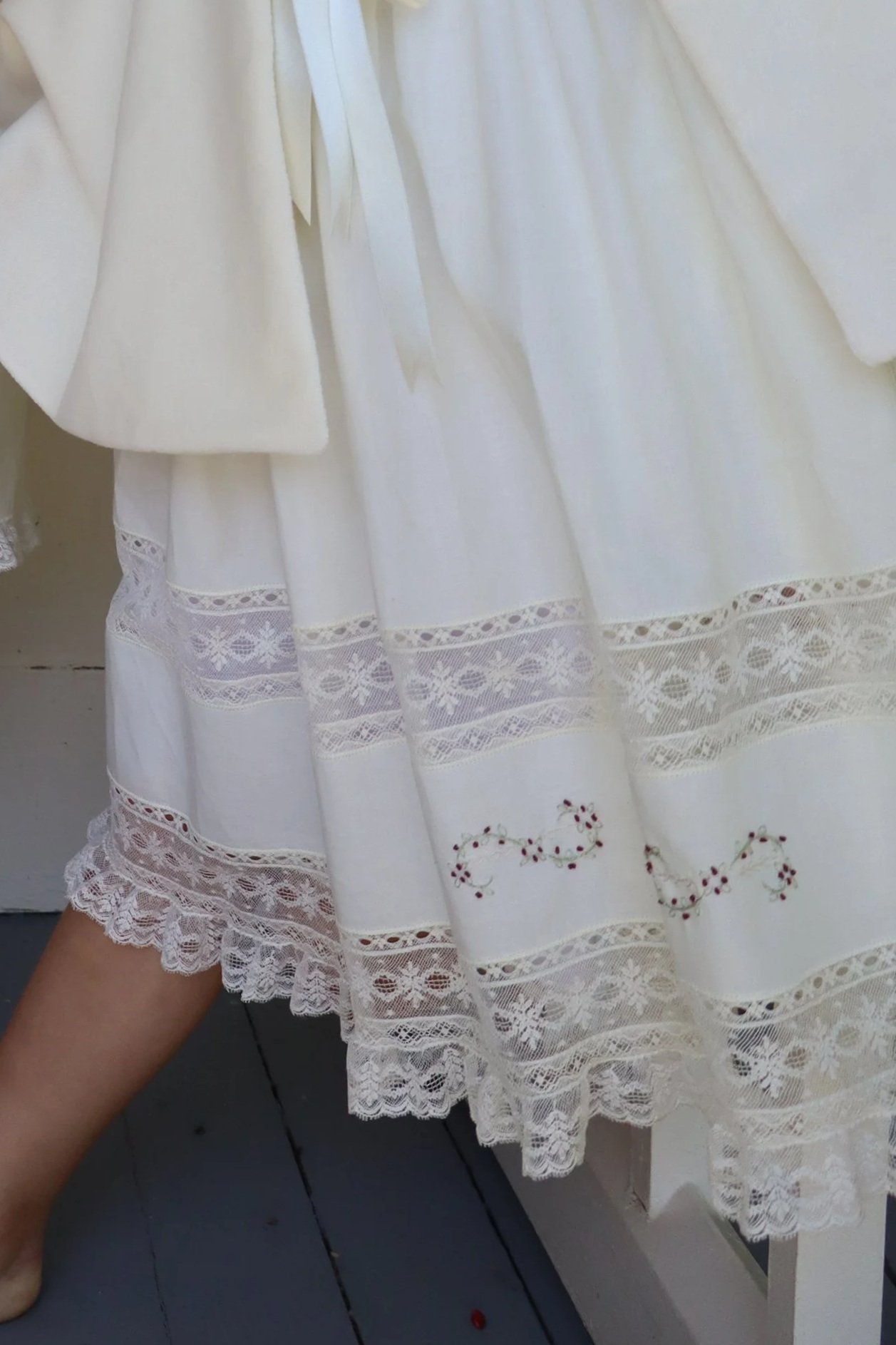
This Dress in Ecru Lawn and over 20 yards of Maline Laces.
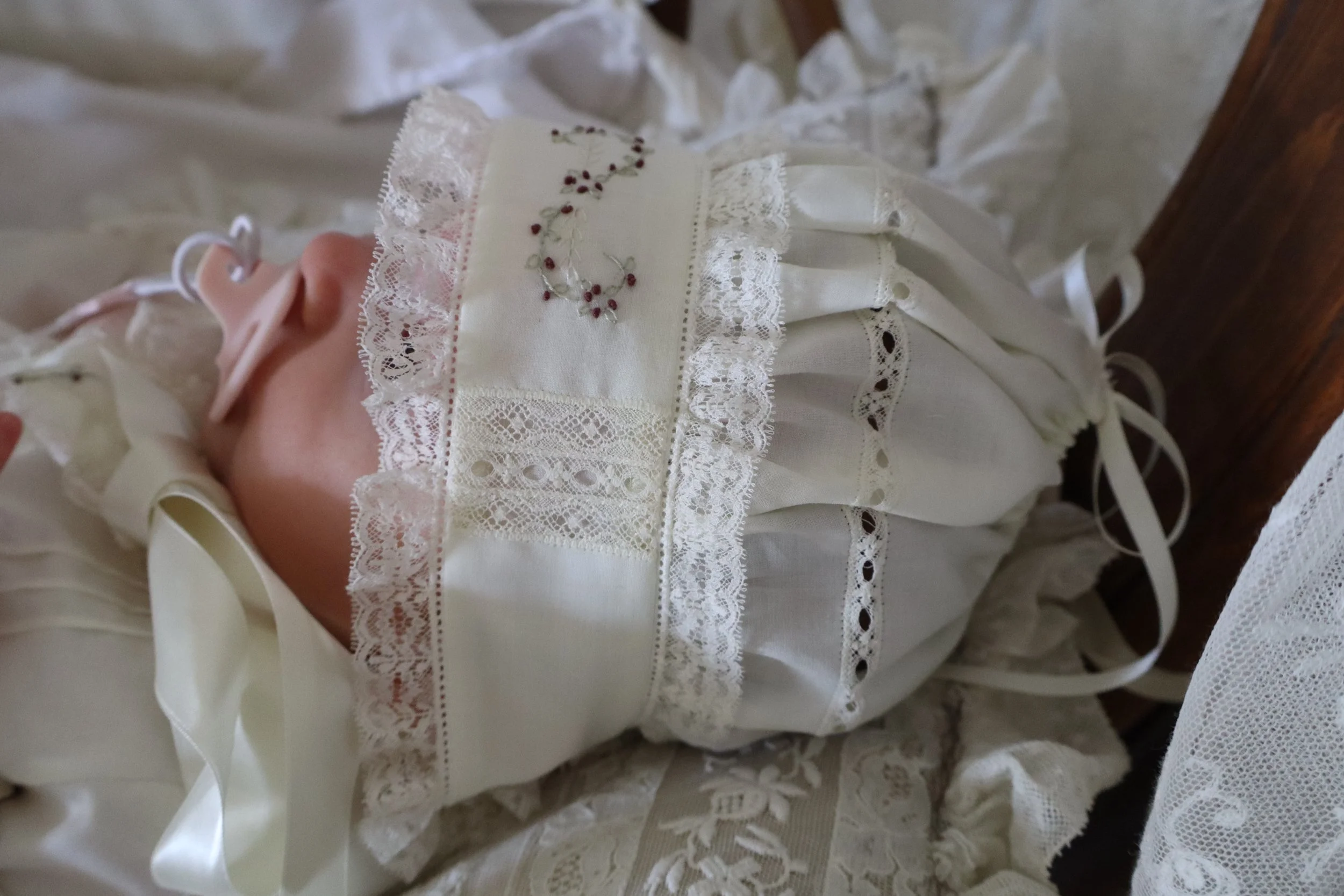
The Bonnet, Ecru Lawn and Maline Laces.
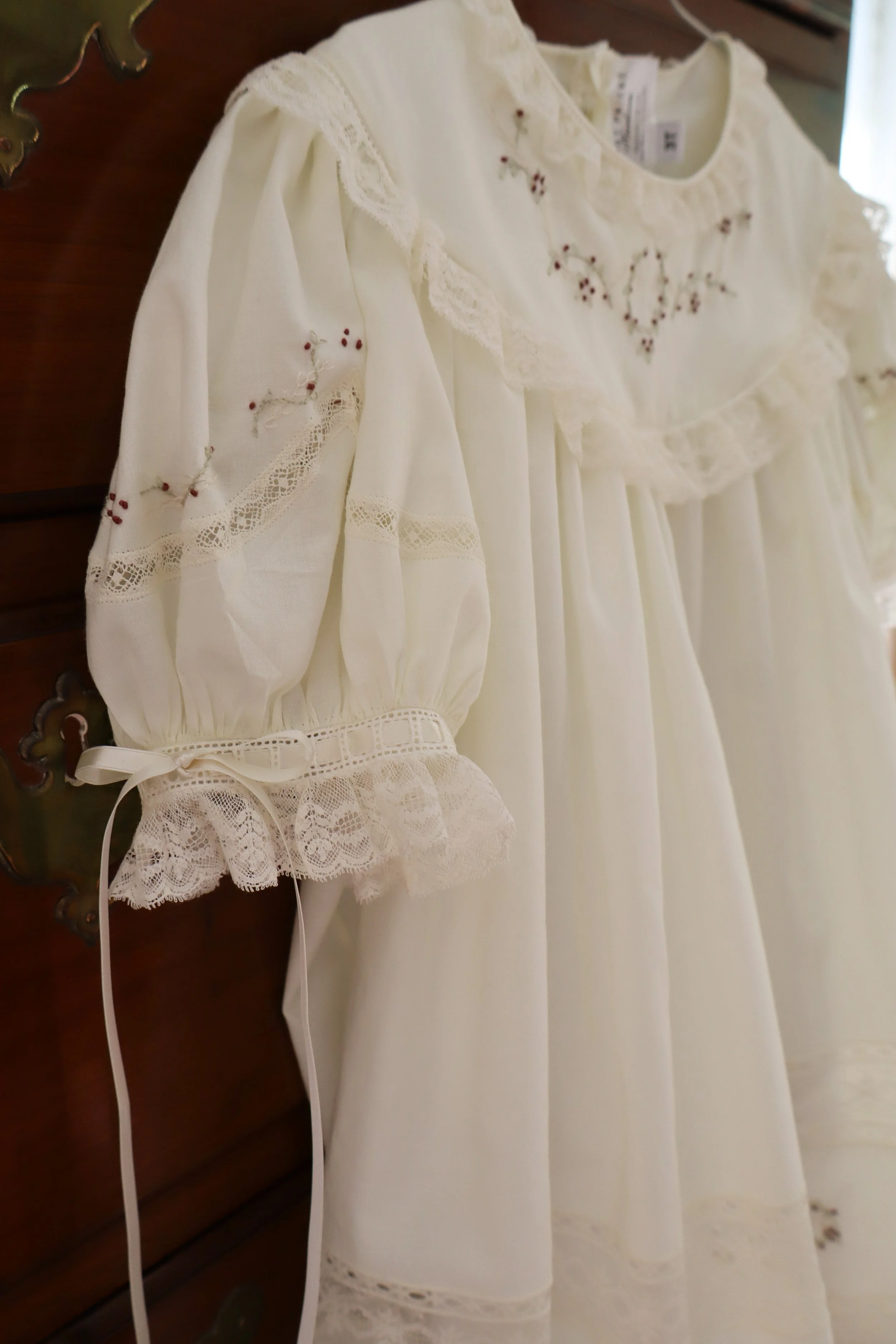
Ecru Lawn, Maline Lace, Silk Satin Ribbons, and intricate hand embroidery.
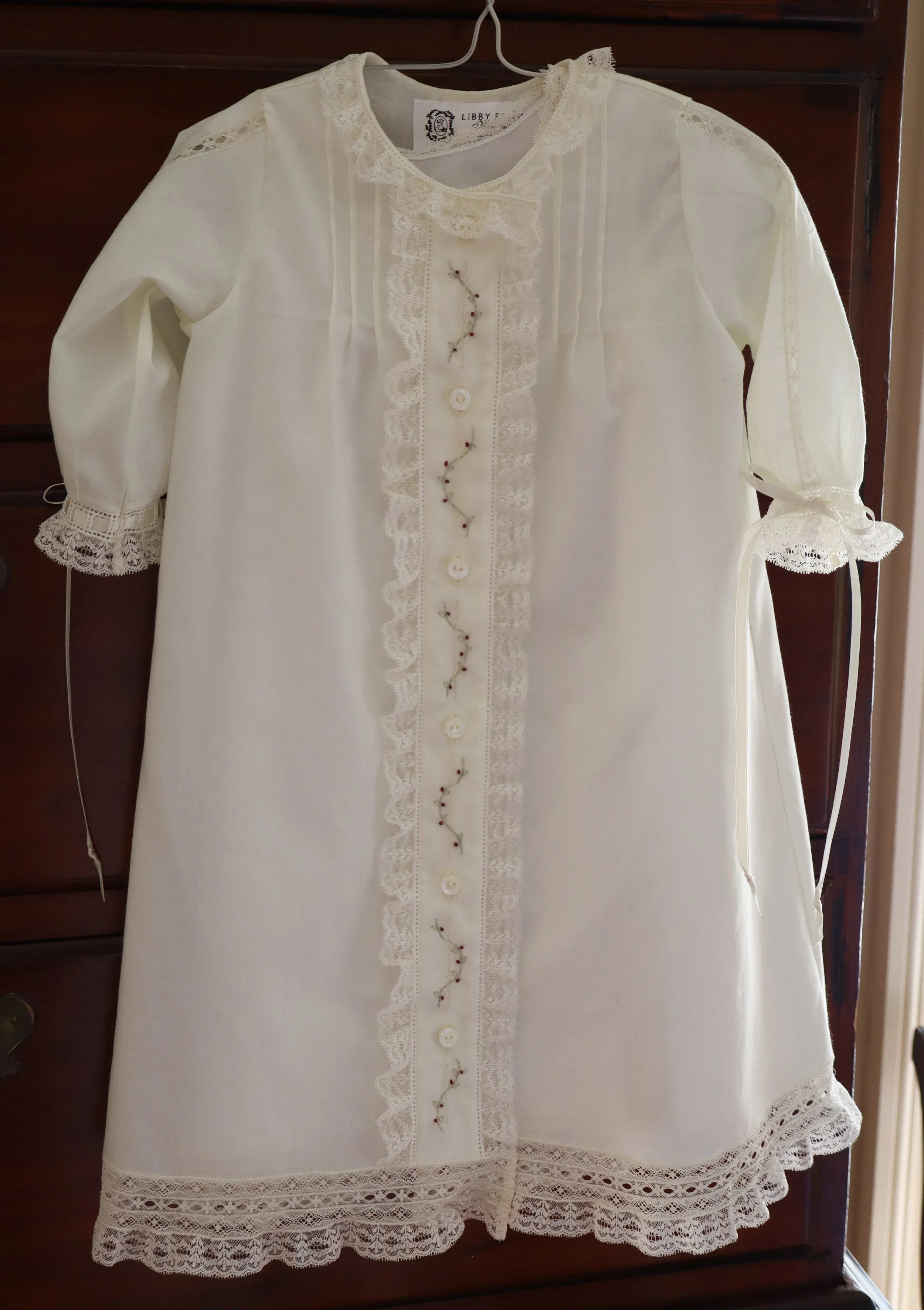
Day Gown with the Maline Laces along the bottom and center, made in ecru Lawn.
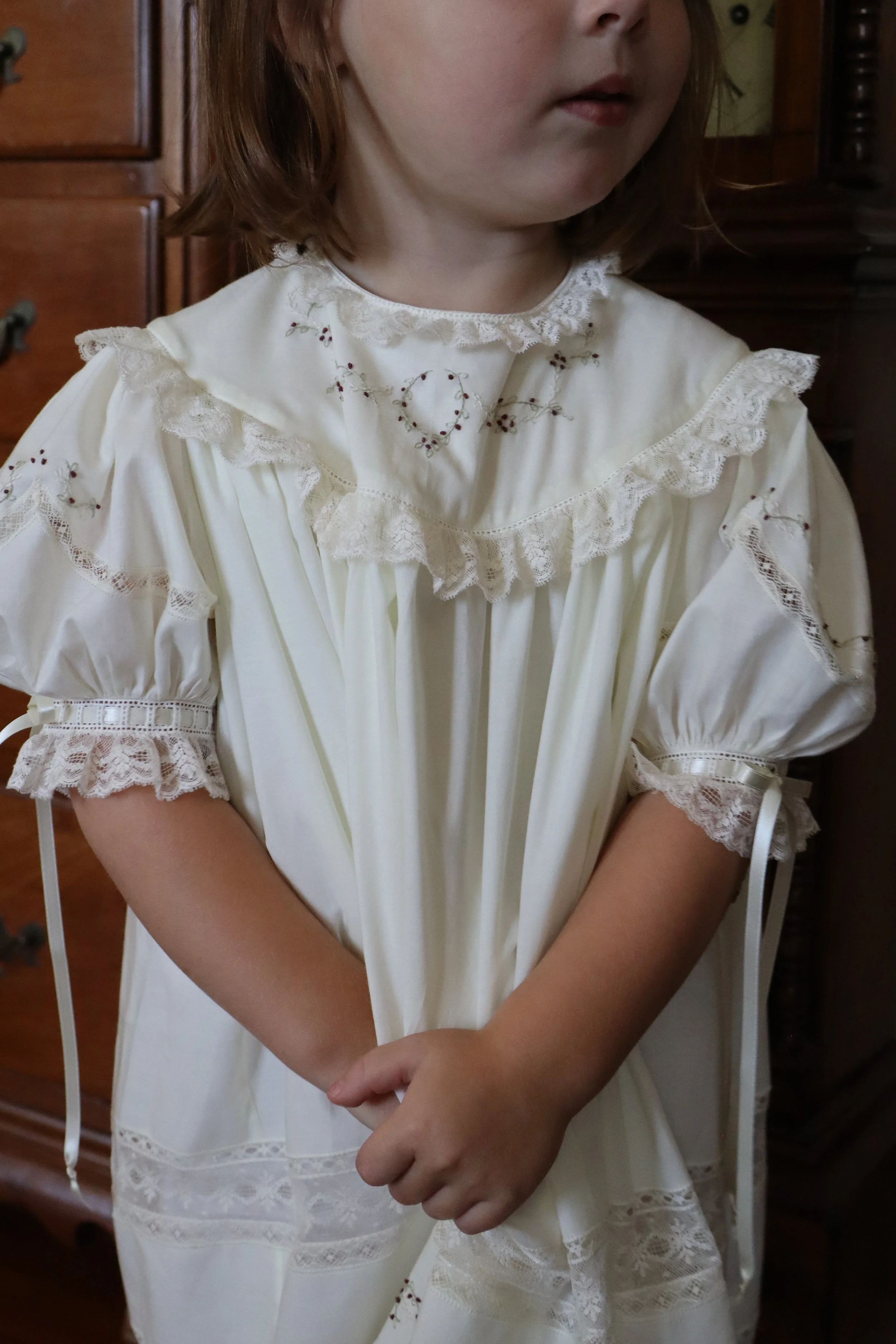
Maline laces, Ecru Lawn stunning hand embroidery details.